


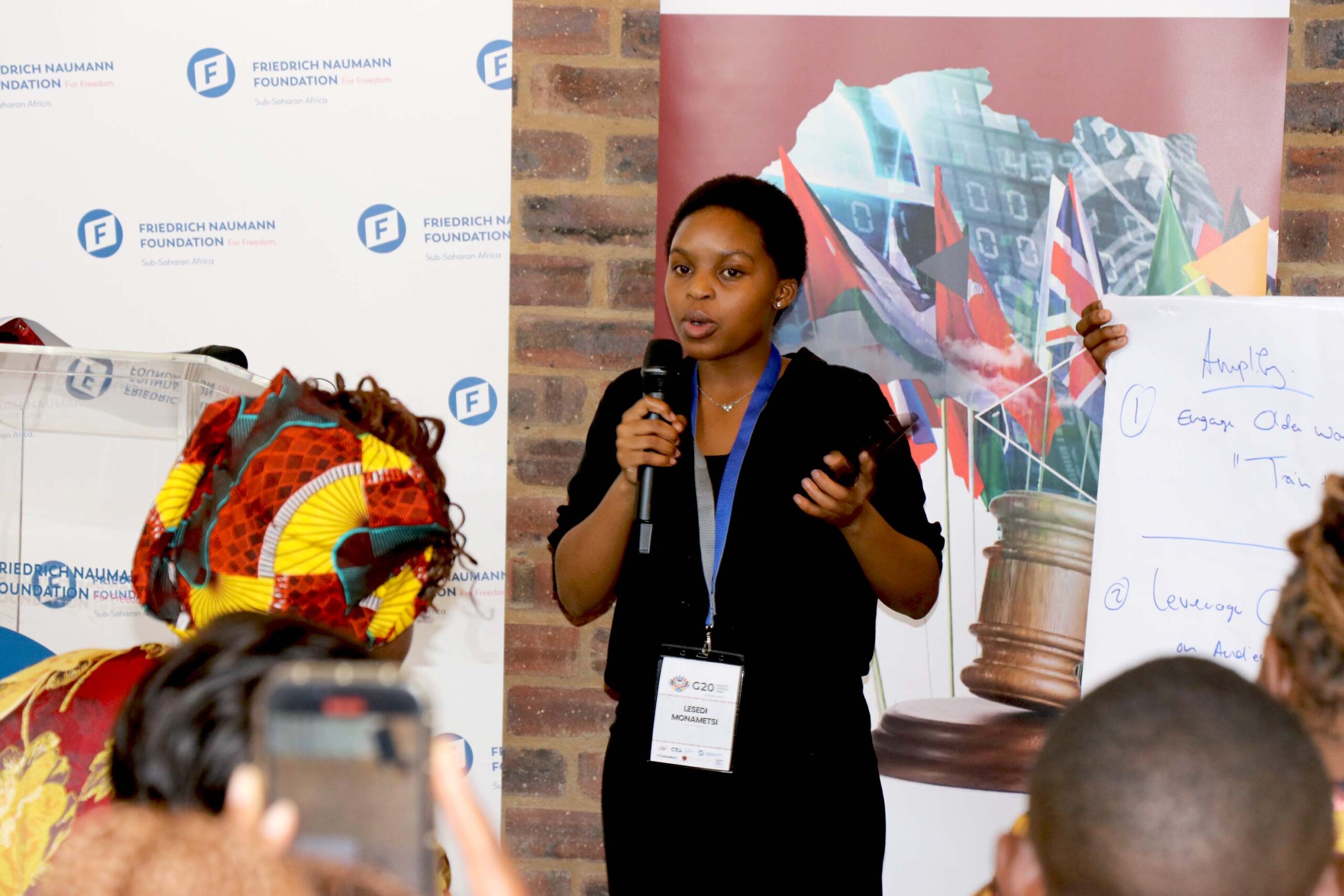
In November 2025, the Governance Consortium convened a high-level G20 sideline event in Johannesburg titled “African Futures: Sustainable Models for Financing Democracy and Development.” The event brought together over 50 youth leaders, policymakers, innovators, and governance practitioners from across 17 African countries to confront a critical question: how can Africa sustainably finance its democratic institutions and development priorities in ways that are sovereign, inclusive, and future-facing?
Co-hosted by African Leadership Academy (ALA), Emerging Public Leaders (EPL), LEAP Africa, and the African Leadership University’s Centre for Re-Imagined Africa (ALU CRA), in partnership with Futurelect and funded by the Friedrich Naumann Foundation for Freedom (FNF), the convening was deliberately youth-centred and action-oriented. Rather than focusing on challenges alone, participants were invited to co-create practical, African-led financing models that reduce dependency on external aid and strengthen democratic resilience.
The day opened with a powerful keynote by Ambassador Dorcas Makgato, former Ambassador of Botswana to Australia, who reframed democracy as an investment rather than a cost. Her message was clear: democratic institutions cannot be fully free or accountable if they rely primarily on borrowed or externally conditioned resources. She emphasized domestic resource mobilisation, diaspora capital, and sovereign endowment funds as viable pathways to long-term democratic sustainability, grounded in African values such as Ubuntu.
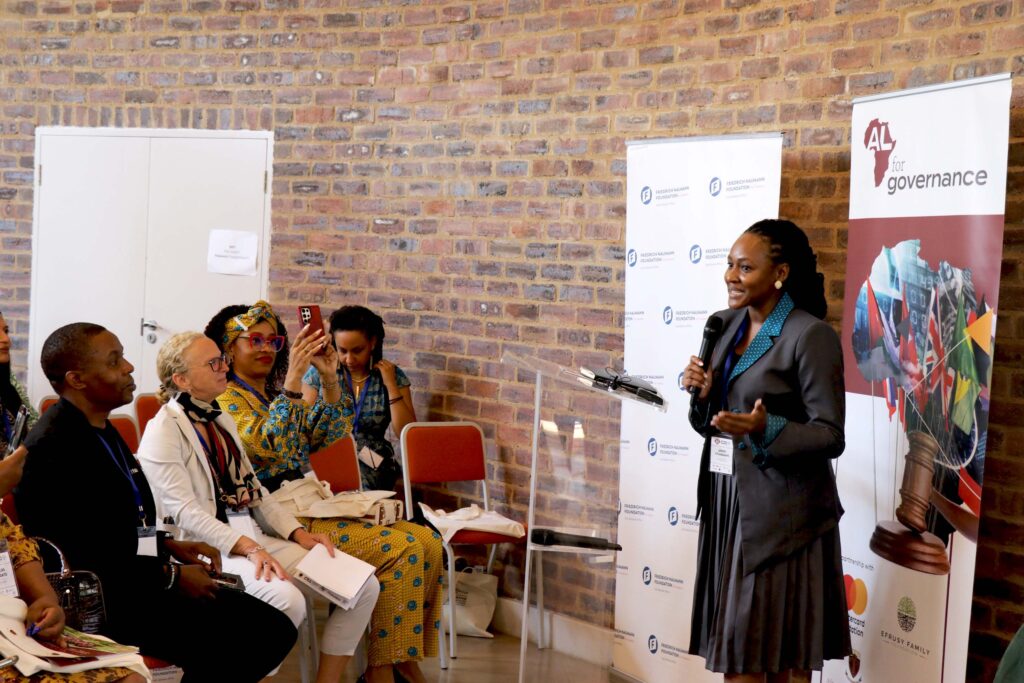
This framing set the tone for a cross-generational fireside chat and panel discussions that followed, where speakers explored what it truly means to “finance freedom” in Africa. Panelists highlighted the need for youth- and gender-responsive public finance, greater transparency in debt and political funding, and financing models that support institutions rather than individuals. Across sessions, a consistent theme emerged: local solutions must lead, with external support playing a complementary role.
A defining feature of the event was its participatory design. Through lightning talks, youth-driven breakout sessions, and a fast-paced co-design sprint, participants worked as civic entrepreneurs to prototype bold ideas. These included diaspora remittance funds for democracy, civic movement crowdfunding mechanisms, youth-focused sovereign wealth concepts, and proposals for a continental endowment fund for democratic institutions. The winning pitch a Diaspora Remittance Fund demonstrated how even a small fraction of remittance flows could unlock sustainable, transparent financing for governance if properly structured and governed
The convening culminated in a set of youth policy recommendations structured around three pillars: financing and economic transformation, governance and inclusion, and civic tech and innovation. Recommendations ranged from strengthening domestic revenue systems and diversifying economies, to investing in civic and financial literacy, leveraging technology for transparency, and redefining democracy in ways that reflect African realities rather than imported models
Overall, the G20 sideline event reinforced a powerful conclusion: Africa’s democratic future depends on financing models that are youth-driven, values-aligned, and institution-centred. The conversations and outcomes from Johannesburg offer a compelling blueprint for policymakers, funders, and citizens alike.
Download the PDF report to read more
Click this link to watch the full recording of the event and engage more deeply with the ideas shaping Africa’s democratic and development
 Africa Career Networks
  English
  French
  Portuguese
  Arabic
Laisser un commentaire
Vous devez vous connecter pour publier un commentaire.