


Kaula’s Journey to Impactful Sign Language Interpretation in Africa
September marks Deaf Awareness Month, a time to celebrate Deaf culture and advocate for inclusion. At its core is International Day of Sign Languages, reminding us that language spoken or signed is a bridge to equality and dignity.
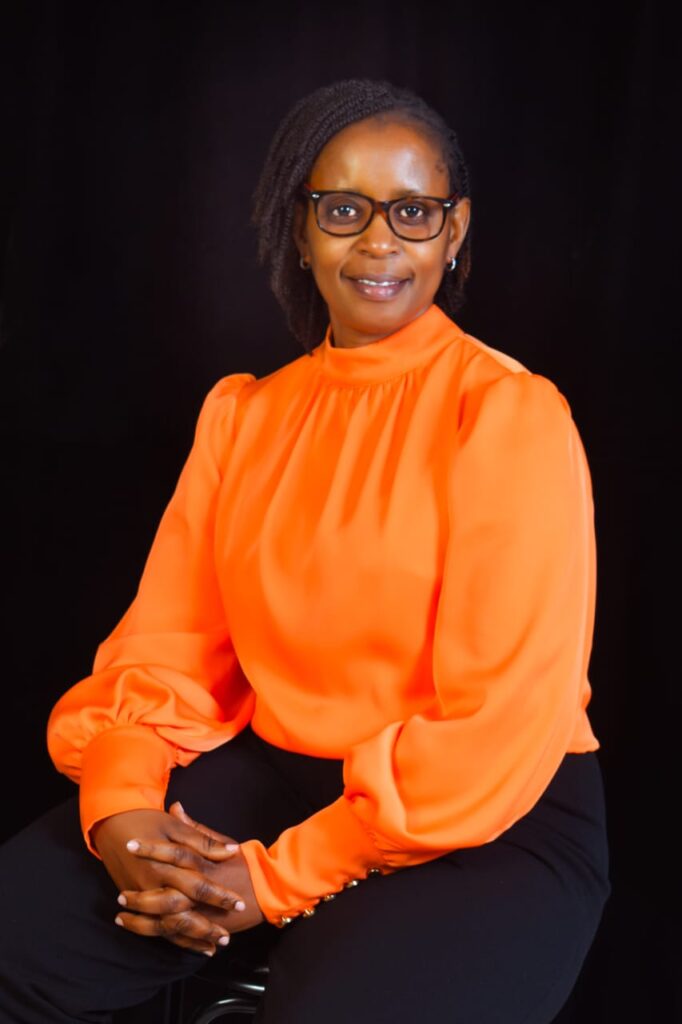
In this spirit, we sat down with Leonida Kaula, a celebrated interpreter, lecturer at the University of Nairobi, author, and co-founder of a sign language interpretation agency. A true pioneer, Leonida has helped shape interpretation into a professional field while amplifying the voices of linguistic minorities.
Her journey is one of service, and purpose and in this article, she shares how her work is transforming the profession and reimagining a more inclusive future.
Can you share a bit about your personal journey, what inspired you to become a sign language interpreter?
My journey into the world of sign language began in the mid-1990s when I was a member of a church attended by a Deaf woman. At the time, there was no interpretation available, and my elder sister would write notes for her during sermons. Each Sunday, I would greet the Deaf woman alongside my sister, and she would try to sign back to me. This simple interaction sparked my interest, and she eventually referred me to a place where I could learn Kenyan Sign Language (KSL).
Soon after enrolling, I was offered a position as a secretary at the same institution, which gave me the unique advantage of learning sign language quickly through daily interactions with Deaf colleagues. Immersed in the Deaf community, I began interpreting informally, as there were very few interpreters at the time.
I was immediately fascinated by the richness of Deaf culture, the expressive storytelling, the humor, and the powerful use of facial expressions. I discovered a vibrant, visual language and a silent world that felt both beautiful and deeply fulfilling to be part of. Just two years into my journey, I received a rare opportunity to train as a professional sign language interpreter and trainer, through a program sponsored by the Danish Deaf Association and the Centre for Sign Language and Sign Supported Communication in Denmark.
That training marked a turning point in my life. It opened my eyes to the professional field of sign language interpreting and the profound impact of bridging communication between Deaf and hearing communities. Since then, I have never looked back.
What has been the most rewarding part of working as an interpreter so far?
The most rewarding part of working as a sign language interpreter has been the privilege of facilitating meaningful communication between Deaf and hearing individuals, bridging worlds that would otherwise remain disconnected. Each time I interpret, I witness the power of full participation: A Deaf person confidently contributing in a high-level meeting, accessing critical information, or simply being heard in spaces where their presence may once have been overlooked.
Beyond the act of interpreting, I have found deep fulfillment in teaching and mentoring emerging interpreters and contributing to the growth of the profession. Watching former students and mentees evolve into confident, skilled professionals, and knowing I played a part in strengthening the field, is incredibly gratifying.
My involvement in the formation of the Kenyan Sign Language Interpreters’ Association in 2001, and the opportunity to serve as its chair for 10 years, allowed me to help shape the development of the profession in Kenya. It also enabled me to collaborate with Deaf leaders in advocating for the recognition of Kenyan Sign Language (KSL) and promoting accessibility for Deaf individuals.
Ultimately, the relationships I’ve built within the Deaf community, and the opportunity to contribute to inclusion, equity, and the recognition of Kenyan Sign Language as a vital part of our national identity, have given my career lasting purpose and meaning.
You are the co-founder of CESLIS (Centre for Sign Language Interpreting Services). What motivated you to start this organization, and what impact has it had so far?
Following the promulgation of Kenya’s 2010 Constitution, which recognized Kenya Sign Language (KSL) and affirmed the right to accessibility for Deaf individuals, there was a significant increase in demand for sign language interpretation services across various sectors. However, in the absence of national standards to regulate the profession, many organizations began engaging interpreters without a structured framework to assess their qualifications or competence. As a result, individuals were often contracted directly, with little to no verification of their skills or experience.
Recognizing this critical gap, I co-founded the Centre for Sign Language Interpreting Services (CESLIS), Kenya‘s first interpreting agency alongside another experienced interpreter. Our goal was to provide a reliable and professional link between organizations and qualified sign language interpreters, ensuring access to competent and skilled professionals.
As an agency led by practicing interpreters and supported by a vetted pool of professionals, CESLIS is committed to delivering high-quality interpretation services. By matching the right interpreter to each assignment, CESLIS upholds both professional standards and accountability, helping to raise the bar for interpretation services across the country.
Equally important to me was creating a platform for professional growth. As someone deeply passionate about training and mentoring the next generation of interpreters, I envisioned CESLIS as more than a service provider, it would be a hub for development. Over the years, I have organized numerous training sessions and mentorship programs through the agency, and a significant number of today‘s practicing interpreters have benefitted from these initiatives.
While other interpreting agencies have since emerged, CESLIS remains a trailblazer. It continues to distinguish itself as a platform for interpreter growth and is widely recognized for its commitment to professionalism, integrity, and excellence in service delivery.
We believe in giving back to the community we serve. As part of this commitment, we frequently offer our services pro bono to Deaf individuals, providing interpretation for personal matters as well as during community events and activities. These include occasions such as the International Week of the Deaf and events organized by Deaf-led organizations that seek our collaboration and support. We do this because we strongly believe in the power of collaboration and community solidarity.
What role do you see CESLIS playing in promoting Deaf empowerment and inclusion in the long run?
In the long run, I see CESLIS playing a critical and multifaceted role in advancing Deaf empowerment and inclusion in Kenya. As a pioneer in the provision of professional sign language interpreting services, CESLIS is uniquely positioned to influence both policy and practice in how communication accessibility is delivered and understood.
Firstly, CESLIS will continue to serve as a trusted partner for organizations seeking to engage with the Deaf community in a meaningful and respectful way. By ensuring access to competent interpreters, we help dismantle communication barriers that have historically excluded Deaf individuals from full participation in education, employment, healthcare, and governance.
Beyond service provision, CESLIS is deeply committed to capacity building both within the interpreting profession and the Deaf community. We aim to expand our training and mentorship programs, not only to raise the standards of interpreting, but also to support the development of Deaf interpreters a concept still relatively new in Kenya. Additionally, we are focused on promoting Deaf-led initiatives and collaborating with stakeholders to influence inclusive and progressive policy frameworks.
Where does your passion for sign language and Deaf advocacy come from?
Learning sign language opened up a beautiful world and culture that awakened something deep within me. I was captivated by the richness of communication in the Deaf community, especially the stories told so vividly through facial expressions, body language, and movement. It was a form of expression unlike anything I had experienced before; authentic, visual, and deeply human.
Through social interactions with Deaf individuals, my eyes were opened not only to the expressive power of the language but also to the immense potential within the Deaf community when given access to communication and information. I felt a strong desire to learn more, not just about the language, but also about the people, their culture, and their experiences. I wanted to be part of that world.
I come from a time when Deaf children in my community rarely had access to formal education. For those who did attend school, opportunities were often limited to vocational training, with little chance of progressing to secondary education or beyond. However, the introduction of sign language as a medium of instruction in schools and its recognition as the official language of Deaf Kenyans has brought about meaningful change. I have witnessed Deaf individuals thrive academically, pursue diverse careers and interests, and excel in their chosen paths once they are provided with the right tools, support, and access to communication.
My passion stems from the deep fulfillment I feel when I see Deaf people realize their full potential. Knowing that sign language is not just a means of communication but a powerful tool for inclusion, independence, and self-expression continues to inspire and drive my advocacy work. It is a key that unlocks access to education, employment, civic participation, and ultimately, a full and meaningful life for deaf individuals.
In your view, what does true inclusion for Deaf people look like in everyday life, workplaces, and communities?
For me, true inclusion of Deaf people in everyday life means ensuring access to communication, equal opportunities, and inclusive services across all sectors. This includes accessible education, healthcare, the justice system, and media. I envision a society where Deaf education is not only accessible but also empowering i.e. enabling Deaf individuals to realize their full potential in whatever career path they choose, whether in academia, office work, sports, or the creative arts. There needs to be space for Deaf individuals with diverse talents especially in the creative arts to thrive and be recognized.
Beyond communication access, workplaces must also be inclusive and accommodating. I find it unrealistic to expect full productivity and engagement from Deaf employees without providing the necessary support and accessible environments. Accessibility should be an integral part of organizational design, not an afterthought.
Deaf representation in leadership and decision-making spaces is absolutely essential. While I can, and in fact do advocate for the Deaf community, being part of that community has taught me that only Deaf individuals can fully articulate their needs and priorities because they speak from lived experience. Their presence at the table is not just important; it is vital to ensuring that policies and systems are truly inclusive, equitable, and responsive to their realities.
Additionally, communities must be sensitized and equipped with basic skills to engage meaningfully with Deaf individuals. When communication barriers are broken at the community level, Deaf people are better able to participate fully in work, education, and civic life just as hearing people do.
What are some of the biggest challenges that Deaf people still face today when it comes to accessibility and communication?
Deaf people often face significant communication barriers due to the lack of qualified sign language interpreters in critical spaces such as hospitals, colleges, police stations, banks, and many other public and private services. While interpreters may occasionally be provided, issues of quality frequently arise. This is largely because those responsible for hiring interpreters often lack the knowledge to assess their qualifications or competence; partly due to the absence of regulatory mechanisms for the sign language interpreting profession in Kenya.
In some cases, accessibility is treated as a formality. Interpreters are hired simply to check a box, without ensuring they can meet the actual communication needs of Deaf individuals. This leads to situations where interpretation services are technically present but functionally ineffective.
Another major challenge occurs when interpreters lack the skill to accurately voice for Deaf individuals. In such cases, the Deaf person’s ideas may be misrepresented, leading hearing audiences to wrongly perceive them as inarticulate or incapable. This kind of miscommunication not only undermines the credibility of Deaf individuals but also reinforces negative stereotypes and deepens their social exclusion.
How can organizations and institutions work better with interpreters to ensure meaningful participation for Deaf people?
Organizations should ensure the provision of competent sign language interpreters to facilitate meaningful participation by Deaf individuals. If unsure how to find qualified interpreters, it is advisable to consult Deaf people for recommendations. Additionally, hiring institutions should engage with interpreters in advance to understand how to work with them effectively. Interpreters should be provided with all relevant information, including details about the assignment, event program, presenters, and any documents that require review.
It is equally important to inform hearing participants that Deaf individuals will be present and to provide them with basic awareness of Deaf culture, as well as guidance on how to work effectively with sign language interpreters. This can be achieved through a brief awareness session at the beginning of the event. If a facilitator is not available, one of the Deaf participants may be invited to share a few key points on how to interact respectfully and inclusively with Deaf individuals. Many Deaf people are experienced in working with interpreters to help convey this information, ensuring smooth and effective communication with hearing audiences.
With the rise of AI and new technologies offering interpretation services, what is your perspective on their opportunities and limitations compared to human interpreters?
Although I think AI tools will fill certain gaps such as providing information in public spaces like airports or in situations where human interpreters are unavailable, they still have significant limitations. I see the diversity of sign languages worldwide as one major challenge. Any AI innovation will need to be adaptable to multiple sign languages, not just one. I also wonder how AI will accurately interpret non-manual signals such as facial expressions, eye gaze, and body movements, which are essential components of sign language communication.
AI technologies are also expensive and are largely inaccessible to many especially in countries like Kenya, where many Deaf individuals live in rural areas without reliable internet access.
I recently attended an international conference for the Deaf, where the intersection of AI and sign language was a key topic of discussion. It became evident that current AI tools have yet to effectively meet the communication needs of Deaf individuals. A significant concern is that many of these innovations have been developed without meaningful involvement from Deaf users, making them less likely to address real-life challenges. Additionally, ethical concerns were raised, particularly in relation to data privacy and informed consent.
As interpreters, we do more than just convey signs, we bring empathy, emotional nuance, and real-time, responsive feedback to our work. Human interpreters offer emotional intelligence, cultural awareness, and contextual understanding qualities that AI, at its current stage, cannot replicate.
We also respond to dynamic situations and unexpected events as they unfold in real time. Our ability to adapt quickly, manage complex interpersonal dynamics, and provide culturally appropriate interpretation is something that AI systems are not yet equipped to handle effectively.
I must admit, there is a great deal of activity among innovators who are continually designing and redesigning solutions. In the near future, we are likely to see innovations that address a significant number of accessibility challenges.
Looking ahead, what is your vision for the future of sign language interpreting and Deaf inclusion in your community and beyond?
I envision a future where well-established sign language interpreter training programs are available, allowing aspiring interpreters to enroll and receive professional, high-quality training in sign language interpretation. Like other professions, I also hope to see the sign language interpreting field properly regulated, ensuring that practicing interpreters are licensed, certified, and held to professional standards.
Currently, the Kenyan Sign Language Bill is undergoing parliamentary processes, aiming to establish a regulatory board for the profession. I am hopeful that this bill will be passed so that only qualified and certified interpreters are licensed to practice, thereby protecting both the integrity of the profession and the rights of Deaf users.
As the African Region Representative of the World Association of Sign Language Interpreters (WASLI), I am deeply committed to the growth of the sign language interpreting profession across the continent. I encourage Deaf associations and interpreter organizations in various countries to consistently advocate for the constitutional recognition of sign languages, as well as the establishment of professional interpreter training programs.
Currently, only four African countries Uganda, Zimbabwe, Kenya, and South Africa, have recognized their national sign languages in their constitutions. Such recognition is a vital step toward empowering Deaf communities and strengthening the sign language interpreting profession throughout the region.
I yearn for a future where Deaf individuals are fully included in all aspects of society, where they have equal access to education, employment, and public services, and where they can pursue careers of their choice without discrimination. Ultimately, no one should be denied opportunities simply because of their communication or accessibility needs.
 Africa Career Networks
  English
  French
  Portuguese
  Arabic
Leave a Reply
You must be logged in to post a comment.