


For six weeks, members of the AL for Agribusiness Network came together to reflect on climate change, an issue that is increasingly shaping the future of agriculture across Africa.
For many of them, climate change is not a distant issue discussed in reports or conferences. It is something they see in their communities, in changing rainfall patterns, declining soil fertility, water shortages, crop losses and the growing uncertainty faced by farmers.
Sub-Saharan Africa contributes less than 4% of global greenhouse gas emissions, yet the continent is among the most affected by climate change. Farmers are experiencing unpredictable rainfall, prolonged dry seasons and changing growing seasons. With less than six percent of farmland in Sub-Saharan Africa under irrigation, compared to more than 40% in Asia, water remains one of the sector’s biggest challenges.

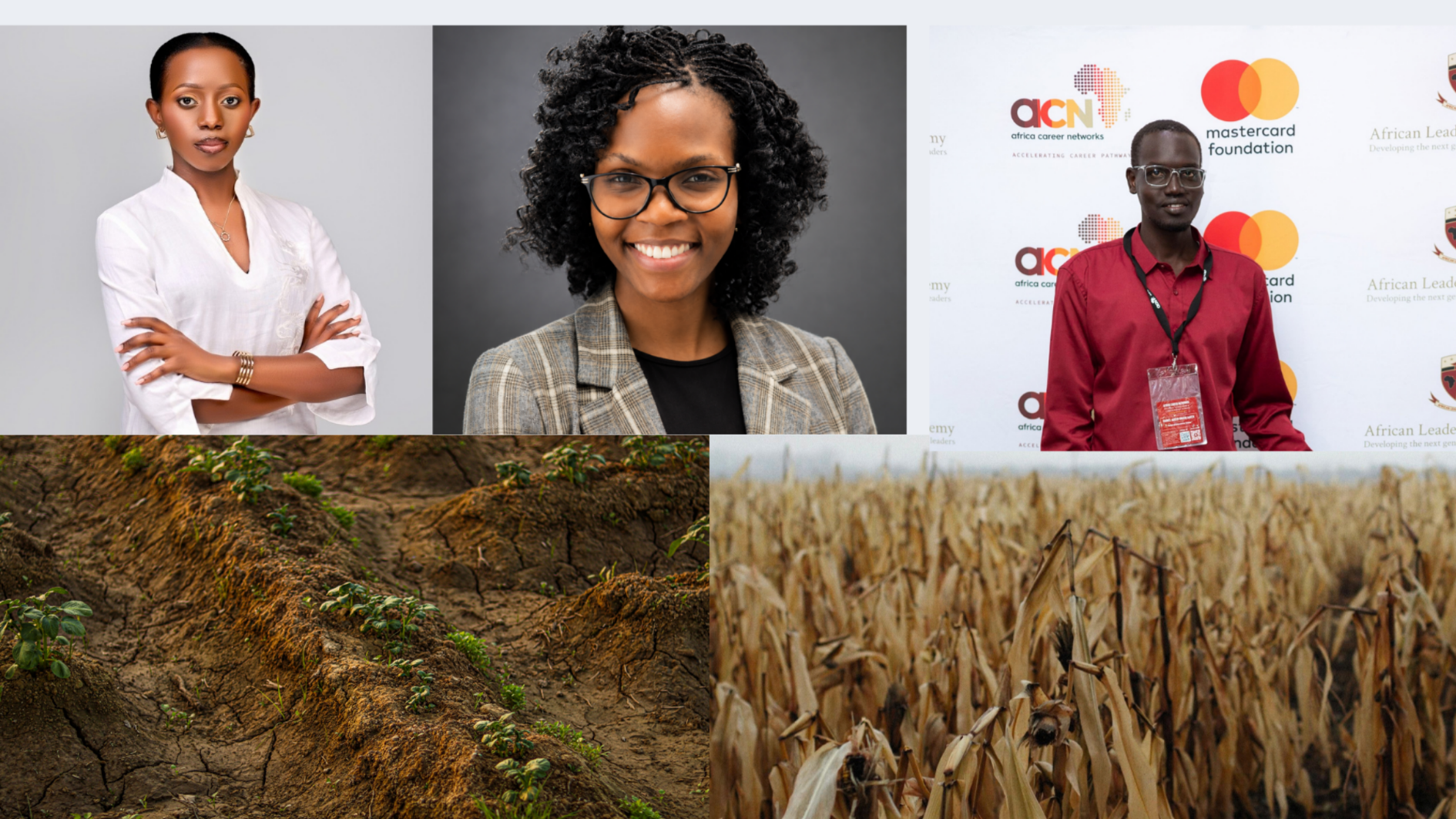
Divine Douce Ineza, an agricultural practitioner from Rwanda, has seen these changes firsthand.
“I have been watching how climate change is increasingly affecting rainfall patterns and water availability across smallholder farming systems in Rwanda. At farm level, I have seen some promising use of low-cost drip irrigation systems and rainwater harvesting solutions, and I believe there is a strong opportunity to scale these through more affordable and farmer-friendly models that integrate access, financing, and practical support.”
Her experience points to an important lesson from the discussion: many of the solutions needed already exist. The challenge is making them affordable and accessible to the farmers who need them.
The same challenge emerged in conversations about soil health. Across Africa, soil degradation, deforestation and unsustainable farming practices are reducing the productivity of farmland. But for Yassar Aliyu Garba, a development practitioner working in market systems and agribusiness in Kano, Nigeria, the problem is not simply a lack of knowledge.
“Agroecology is the answer. But the challenge is making it bankable for smallholder farmers. The farmers I work with know that compost, cover cropping, and reduced tillage improves their soil. What is missing is not knowledge. It is access to financing for organic alternatives, guaranteed markets that reward regenerative practices, and capital to bridge the two or three seasons before soil health translates into higher yields.”
This was a recurring theme throughout the six-week conversation. Farmers need more than training. They need financing, markets, insurance, extension services and policies that make sustainable practices economically viable.
Adengo Christopher, co-founder of Ecofarm Innovations and an AL for Agribusiness Co-Creation Fund Award winner, highlighted the importance of extension services and demonstration farms, as well as crop insurance and policies that encourage sustainable agriculture. Nancy Musa, founder of Novagra, added that farmers are often more willing to adopt new practices when they see a neighbor succeed with them. Local examples and peer learning can therefore be just as powerful as formal training.
The conversation also turned to food prices and livelihoods. Climate shocks quickly become market shocks. Droughts and floods can reduce production, disrupt supply chains and push food prices higher. For businesses, this makes planning and investment more difficult. For households already spending much of their income on food, it can be devastating.
Young people are also at the centre of this challenge. When farming becomes less productive and less predictable, many young people leave rural communities in search of other opportunities. Yet the network believes agriculture can offer something very different from the traditional image of farming.

Daniel Ageer Dhuor Ageer, a Mastercard Foundation Scholar from KNUST, said:
“Many youth who have limited knowledge of what constitutes agriculture think of it as drudgery — as it had been in the old ages. But there are now a lot of technologies in place for different sectors of agriculture, with engineering leading the way, that make farming more attractive and more income-generating than before.”
For the network, changing this perception is important. Agriculture is no longer only about working in the field. It increasingly involves technology, data, finance, processing, logistics, climate innovation and entrepreneurship. Creating these opportunities could help make agribusiness a career of choice for Africa’s growing youth population.
Insurance was another important part of the discussion. With only a small proportion of smallholder farmers having access to agricultural insurance, one poor season can wipe out a farmer’s income and savings. Expanding affordable insurance and climate financing will be critical if farmers are to take risks, invest in their farms and recover from climate shocks.
By the end of the conversation, one thing was clear: climate change is not a single agricultural problem. Water, soil health, food prices, youth employment, financing and insurance are all connected.
The AL for Agribusiness Network brings together people who are already working across these areas. Their experiences show that Africa does not lack ideas or capable people. What is needed is greater access to finance, supportive policies, practical delivery and stronger connections between solutions and the communities they are intended to serve.
The climate challenge is already here. The opportunity now is to build African agribusiness systems that are productive, resilient and able to create opportunities for the generations that will inherit them.
 Africa Career Networks
  English
  French
  Portuguese
  Arabic
Deixe um comentário
Tem de iniciar a sessão para publicar um comentário.