


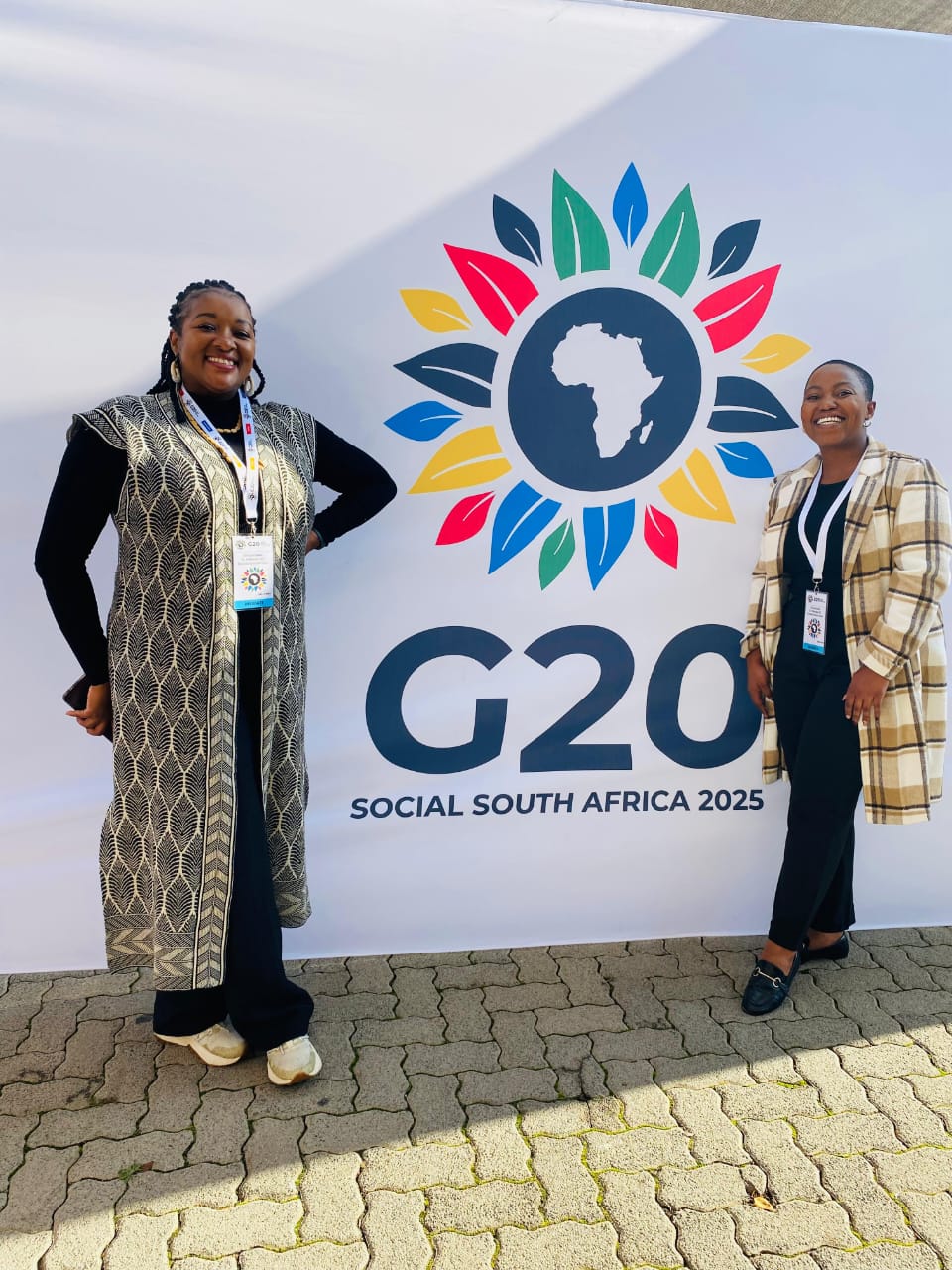
When I walked into the G20 Social Summit in November 2025, hosted for the first time on African soil under the theme Solidarity, Equality, Sustainability, it felt like more than attendance. It felt like an arrival. Following the G20 side event hosted by AL for Governance, I had the honour of joining the Summit alongside Malilomo Nkhabu of the Friedrich Naumann Foundation for Freedom. What unfolded was not simply a convening of global stakeholders, but a moment of recognition: Africa was no longer just contributing to global dialogue, it was shaping it.
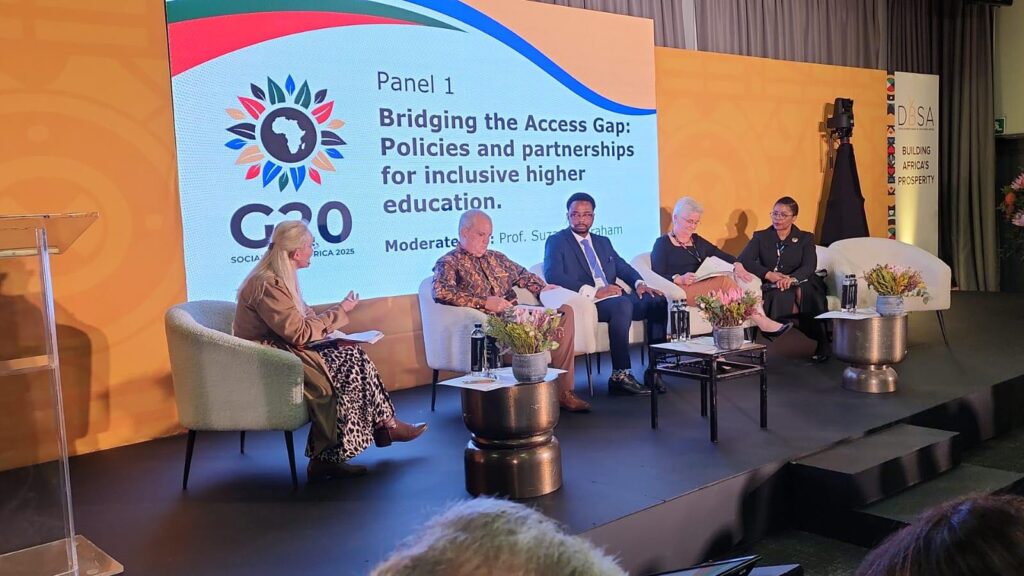
Yet the urgency beneath the symbolism was clear. Across the continent, communities continue to navigate widening digital divides, persistent inequality, exclusion from formal economies, and development frameworks that often fail to reflect lived realities. The question confronting us was not whether global commitments exist, but whether they translate into outcomes that serve people, particularly those historically left at the margins.
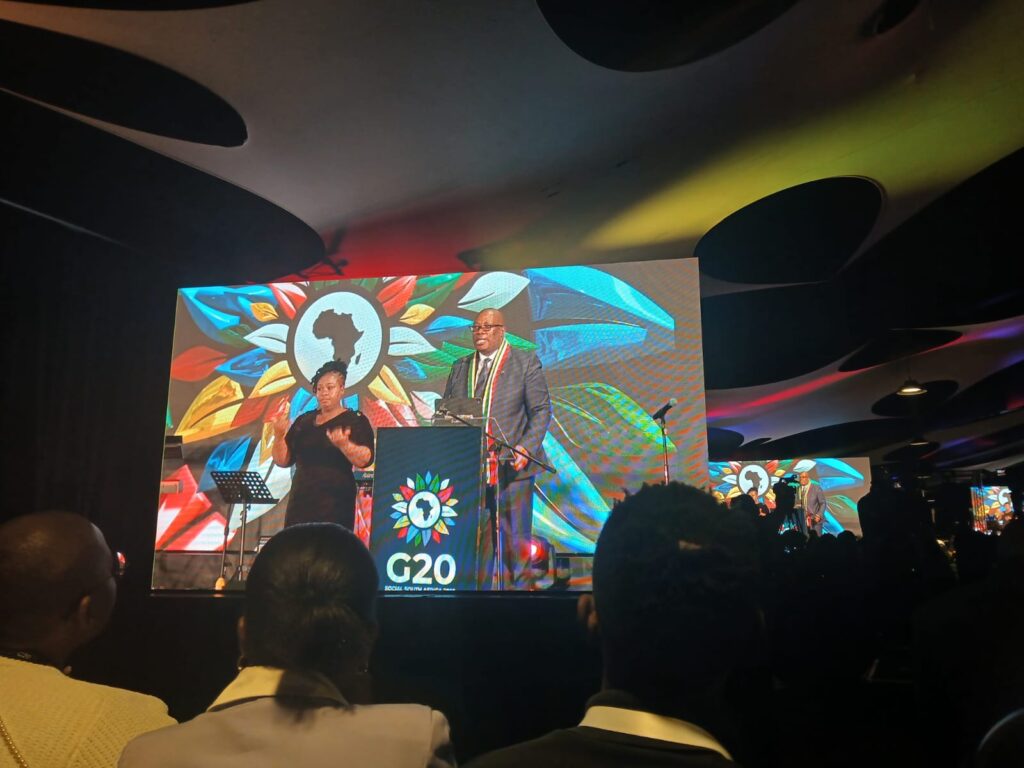
In response, we participated in working groups and thematic forums on Digital Inclusion and Equitable Transformation, and Accelerating the SDGs and Agenda 2063. These sessions were not theoretical exercises. Civil society leaders, youth advocates, policymakers, and grassroots organisations worked deliberately to translate lived experience into actionable policy language that could influence Heads of State. Conversations centred on ensuring that digital transformation expands opportunity rather than reproduces inequality, and that development is co-created with, not imposed upon, communities.
What emerged was a collective insistence on dignity-driven development. Across formal sessions and informal convenings, participants explored entrepreneurship as a pathway to agency, financial inclusion as a gateway to participation, and youth leadership as a legitimate force for accountability. From trusted Gogo’s leading village co-operatives to young activists refusing to be spoken for, the Summit reflected an Africa actively defining its future, not waiting to be invited into it.
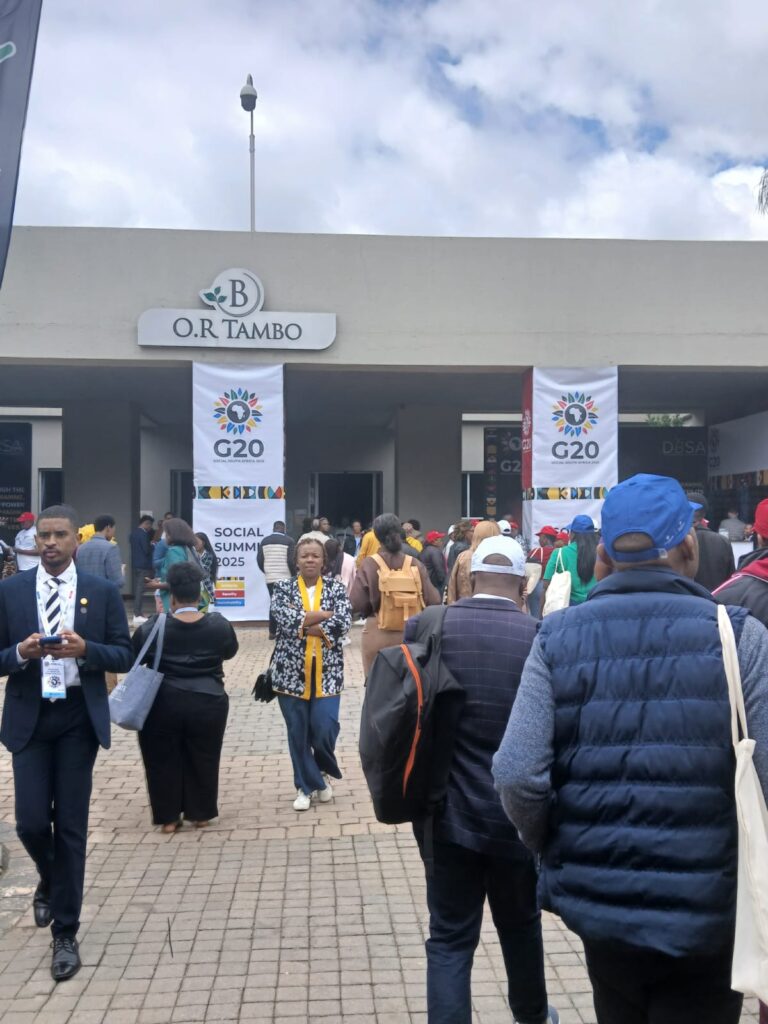
One of the most powerful throughlines was inclusion. Community-based organisations from across the continent advocated persistently for the full participation of Persons with Disabilities in social, economic, and political life. The youngest voice in that room was just ten years old. In an era where inclusion is often reduced to rhetoric, this was Ubuntu in action, a shared belief that progress is hollow if it is not shared.
For me, the Summit marked a quiet turning point. It was a moment of pride, not only in being present, but in being African. It affirmed that this continent is no longer merely responding to global agendas, but asserting its own moral and developmental authority on the world stage.
Ultimately, the G20 Social Summit reinforced a truth at the heart of Africa Career Networks’ work: representation matters because policy shapes lives. If we are not in the room, decisions will still be made, but without our realities, values, or aspirations. Civic participation is not optional; it is foundational to building systems that work for people.
And Africa is no longer asking to be included. It is leading.
 Africa Career Networks
  English
  French
  Portuguese
  Arabic
اترك تعليقاً
يجب أنت تكون مسجل الدخول لتضيف تعليقاً.